
Clear your calendar, set an early alarm and look up. One of November’s most anticipated celestial events is making its annual appearance, and Narrandera Shire’s night skies offer a beautiful place to watch it unfold.
The Leonid Meteor Shower returns this week, with shooting stars expected to streak across the sky overnight on Tuesday 17 November and into the early hours of Wednesday 18 November 2026. For early risers, night owls, and anyone who loves an excuse to spend a little longer under the stars, this one is worth setting an alarm for.
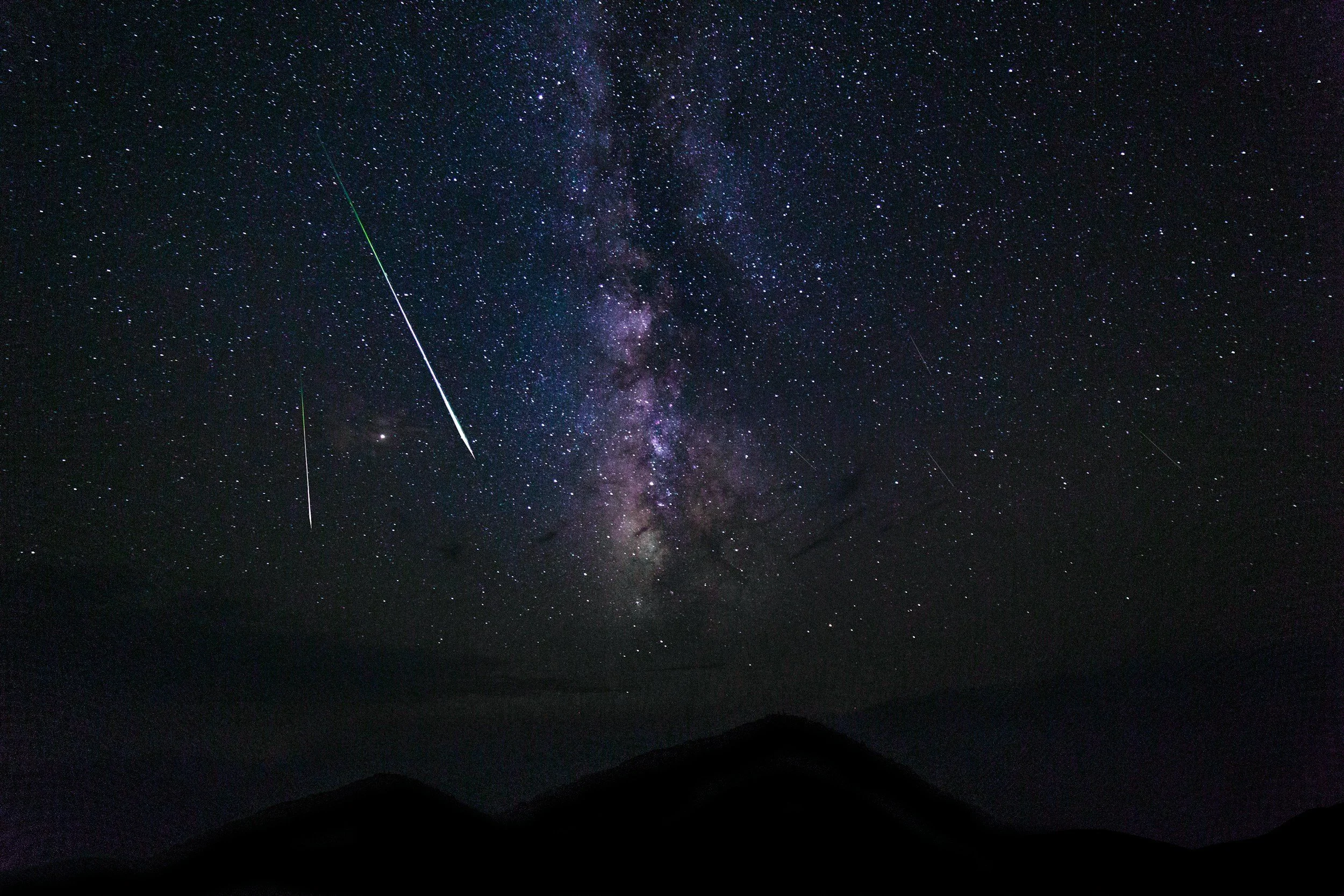
When to see the Leonid Meteor Shower in NSW
The Leonids are active throughout much of November, occurring from about the 14-20th, with the shower is expected to reach its peak on the morning of Wednesday 18 November.
Our recommendation is to plan a very early-morning adventure on Wednesday. Here in Narrandera, the moon will set around 2am, offering a moon-free dark sky until about 4:20am. Around 2:37am, the radiant of the Leonids will rise in the northeast and the Leonids should be visible until dawn.
NASA’s November skywatching guide suggests that, under ideal conditions, the shower could produce around 15 meteors per hour; however, the Australian Space Weather Forecasting Centre indicates that, here in the Southern Hemisphere, we’re likely to see closer to 10 per hour.
What are the Leonids?
Every November, Earth passes through a trail of particles left behind by the Comet 55P/Temple-Tuttle, which orbits the Sun approximates every 33 years. As these particles enter Earth’s atmosphere at extraordinary speeds, they heat up and produce the brilliant flashes of light we know as shooting stars.
According to Australian Space Weather Forecasting Centre, the Leonids are among the fastest meteors observed, travelling at approximately 72 kilometres per second. Their incredible speed can produce bright streaks of light, sometimes leaving glowing trails that linger in the sky for several seconds or even minutes.
The shower also has a remarkable history. The Leonids take their name from the constellation Leo, where the meteors appear to originate. In 1833 and 1966, the Leonids produced extraordinary meteor storms, with thousands of meteors lighting up the sky.
While nothing quite so dramatic expected this year, the annual shower remains a beautiful reminder of just how much is happening above our heads.
Where to Watch the Meteor Shower
One of the pleasures of visiting regional NSW is the opportunity to escape the bright lights of the city and experience the night sky in all its glory.
Nararndera Shire’s open landscapes and darks skies offer opportunities to find a darker patch of sky and settle in for a little stargazing. For the best experience, choose a safe publicly accessible location away from streetlights, buildings and other sources of artificial light.
Our recommendations:
Bundidgerry Hill Stargazing Point provides a high vantage point with minimal light pollution only a couple of minutes outside of town.
Rocky Waterholes is a beautiful spot to watch the night sky. Whilst your view of the night sky may be slightly interrupted by trees, there is potential for a beautiful reflection of the stars on the water.
How to See the Leonids
You won’t need a telescope, binoculars or any special equipment as these meteors can be seen with the naked eye. Although they originate from the constellation Leo in the northeast, the Leonids can appear across a wide area of the sky so look generally towards the northeast but keep your view wide.
Finding a dark location, allowing your eyes to adjust and watching a wide area of sky will improve your chances of spotting a meteor. It can take 20-30 minutes of not looking at any bright lights or screens for your eyes to fully adjust. We also recommend bringing a blanket, a reclining chair and an extra layer for the early-morning chill.
Missed the Leonids? There’s More to Come
The night sky has another show in store with the Geminid Meteor Shower returning in December with its annual peak expected in the early morning of Tuesday 15 December 2026.
Known for its bright and sometimes colourful meteors, the Geminids are considered one of the year’s most impressive and reliable annual meteor showers. Unlike the Leonids, which originate from a comet, the Geminids are produced by debris associated with an asteroid known as 3200 Phaethon.
And there’s good news for Australian stargazers. In an ABC Science article, University of Southern Queensland astrophysicist Professor Jonti Horner identifies the Geminids as a particularly promising meteor shower, with a better chance of an impressive display when the skies are clear.
The Geminids will be worth watching over several nights around their mid-December peak, with the late-evening and early-morning hours offering opportunities to catch the display. With a little luck and clear skies, it’s another wonderful opportunity to escape the city lights, find a quiet spot beneath the stars and experience the magic of the Riverina after dark.